The 48-Hour Window: How to Actually Land After an Intense Scene

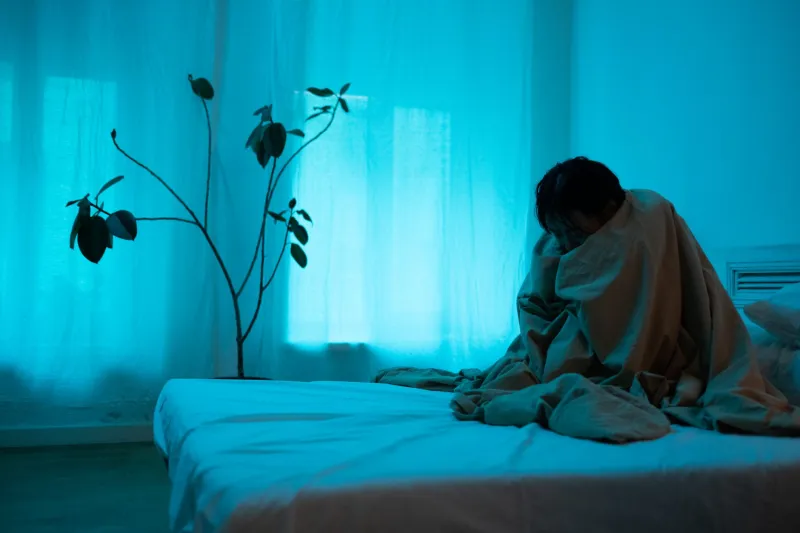
You made it through. The scene was intense — maybe beautifully so — and in-the-moment aftercare did its job. Your partner wrapped you up, you ate something, you talked a little, you slept. And then you woke up the next morning and felt... strange. Not bad, exactly. Not good, either. Just somewhere in between, like a radio signal that's almost tuned in but not quite.
That feeling has a name in some communities — sub drop, top drop, or just the general post-scene hangover — but naming it doesn't automatically tell you what to do with it. The 12 to 48 hours after intense play are their own distinct territory, and most people are navigating them completely without a map.
This is about drawing that map.
Why the Day After Hits Different
Here's the thing about your nervous system: it doesn't clock out when the scene ends. During intense play — whether that's power exchange, sensation, emotional vulnerability, or some combination of all three — your body floods with adrenaline, endorphins, and oxytocin. That cocktail is part of what makes the experience feel transcendent. But hormones don't vanish cleanly. They metabolize, and that process can take well over a day.
The result? A lot of people describe the morning after as emotionally flat. Some cry unexpectedly. Some feel irritable with people who had nothing to do with any of it. Others experience a quiet, melancholy euphoria — like the tail end of a really vivid dream you can't hold onto. None of this means something went wrong. It means you're human, and your body is doing the unglamorous work of returning to baseline.
The problem is that regular life doesn't pause for this process. You've got work emails. A dog that needs walking. Maybe a roommate who wants to tell you about their weekend. The gap between where you are internally and what the world is asking of you can feel genuinely disorienting — and without a plan, a lot of people just white-knuckle through it and wonder why they feel off for days.
Building Your Personal Re-Entry Protocol
Think of the 48-hour window less like a recovery period and more like a deliberate transition. You're not broken. You're just traveling back from somewhere, and the trip takes a little time.
Start with the physical. Your body carried you through something significant. Honor that. This doesn't have to be elaborate — it can be as simple as a long shower with a soap you actually love, a real breakfast instead of whatever's fastest, or a slow walk outside without headphones. The point is to give your nervous system sensory input that's gentle, familiar, and completely yours. A lot of people find that heat helps — a bath, a heating pad, even just a warm mug in both hands. It's not woo; it's just physiology.
Protect your social bandwidth. The day after a heavy scene is not the day to overcommit. If you can, keep your schedule lighter. Be honest with yourself about how much social energy you actually have. Saying "I'm a little low-key today" to friends or colleagues doesn't require explanation. You don't owe anyone a reason for needing quiet.
Write something down. Journaling gets a lot of eye-rolls, but in this specific context, it does something nothing else quite replicates. You don't need to write eloquently. You don't need to write a lot. Even a few sentences — what happened, what you felt, what surprised you, what you're grateful for — creates a record that your future self will find genuinely useful. Over time, these entries become a personal map of your own patterns. You'll start to notice what kinds of scenes tend to leave you needing more recovery, what helps, what doesn't.
Some prompts to get you started:
- What part of the experience is still sitting with me?
- Is there anything I'm feeling that I haven't been able to name yet?
- What does my body need right now that it isn't getting?
- What am I proud of?
If You Have a Partner in This
The check-in text is underrated. A lot of play partners do great in-the-moment aftercare and then go radio silent — not out of callousness, but because they assume the hard part is over. It usually isn't.
A simple message the next morning — "Hey, thinking about you. How are you landing?" — costs almost nothing and means a tremendous amount. If you're the one who tends to drop, it's completely okay to ask for this explicitly during your pre-scene negotiation. Something like, "I'd love a check-in text tomorrow afternoon" is a reasonable, specific request that most partners are genuinely happy to fulfill once they know it matters.
For longer-term partners or ongoing dynamic relationships, consider building a more structured 24-hour check-in into your regular practice. This doesn't need to be a formal debrief — it can be a voice note, a short phone call, or even a shared document where you both leave a few notes. The ritual itself communicates care, and that communication is part of what makes the whole thing sustainable.
Solo Recovery Is Real Recovery
Not every intense experience involves a partner, and even when it does, you're often processing most of the aftermath alone. Solo recovery deserves just as much intentionality.
If you play solo, build the same kind of protocol. Give yourself transition time before jumping back into tasks. Make a playlist for the morning after — something that matches the emotional temperature you're actually at, not where you think you should be. If you have a therapist or a trusted friend who knows this part of your life, consider reaching out. You don't need to be in crisis to deserve support.
And if you're someone who tends to feel a kind of quiet shame in the aftermath — that creeping second-guessing that whispers was that too much, was that okay, what does it mean that I wanted that — write that down too. Sunlight is the best disinfectant for those particular thoughts, even if the only person reading your journal is you.
The Ritual Is the Point
Here's what all of this comes down to: the re-entry from intense experience isn't something you should just survive. It's something you can actually design. A personal protocol — even a loose one, even one you're still figuring out — signals to your own nervous system that you're being taken care of. That signal matters.
You don't need a perfect system. You need a consistent one. Over time, your 48-hour window stops feeling like something that happens to you and starts feeling like a known part of the journey — one you're prepared for, one you've made space for, one that carries you back to yourself with a little more grace each time.
The scene ends. The work of returning continues. And you're more than capable of doing it well.