From Curious to Connected: A Real Person's Guide to Finding Your Kink Community in America
From Curious to Connected: A Real Person's Guide to Finding Your Kink Community in America
Let's be honest about something: the internet gave us infinite access to information about kink, BDSM, polyamory, and the full spectrum of alternative sexuality — and somehow, a lot of us still feel completely alone in it.
You've done the reading. You've watched the documentaries. You've maybe even made a profile on a platform you deleted three days later because it felt weird and you weren't sure if it was safe. And yet the thing you actually want — people — still feels frustratingly out of reach.
Here's what nobody tells you early enough: community is the missing piece. Not more research, not the perfect profile, not waiting until you feel "ready enough." The people who go from curious to genuinely confident in their kink identities almost always point to finding their tribe as the turning point.
So let's talk about how to actually do that.
First, Understand What You're Looking For (Even If It's Vague)
You don't need to arrive at a community with a fully formed identity and a laminated list of your kinks. Nobody does. But it helps to have a loose sense of what draws you, because the lifestyle community in the US isn't one monolithic thing — it's a constellation of overlapping subcultures, each with its own vibe, norms, and entry points.
Are you curious about BDSM dynamics? Interested in ethical non-monogamy or swinging? Drawn to leather culture, kink education, or just generally want to be around people who don't flinch when you bring up your interests? Knowing even roughly where your curiosity points helps you find the right door to knock on first.
And if you genuinely have no idea? That's fine too. Starting broad is completely valid.
Munches: The Most Underrated First Step
If there's one thing the kink community does brilliantly that more people should know about, it's the munch.
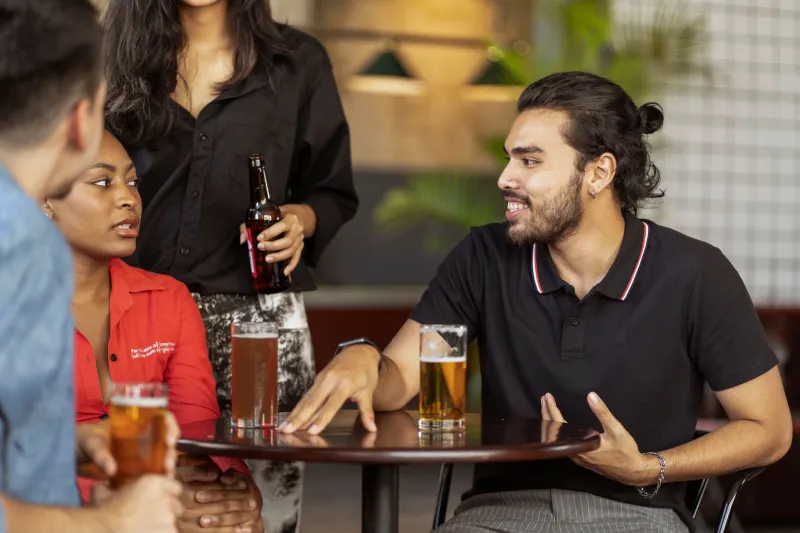
A munch is a casual, informal meetup — usually at a regular restaurant or bar — specifically designed for kink-curious and kinky people to meet in a completely vanilla, public, non-sexual setting. No play, no costumes, no pressure. Just people having lunch or drinks and talking.
Munches exist in virtually every major US city and a surprising number of smaller ones. They're typically listed on Fetlife (more on that in a moment), through local BDSM education organizations, or via a quick search for "[your city] munch."
Why are they so valuable for newcomers? Because they strip away every intimidating element except the actual humans. You go, you meet people, you realize everyone is pretty normal, and the community suddenly stops feeling like a secret society and starts feeling like a group of interesting people you might actually want to know.
FetLife: What It Is and How to Use It Without Getting Overwhelmed
FetLife is the closest thing the kink community has to a social network, and if you haven't heard of it, now you have. It's free, US-based, and has been around long enough that most established community groups — munches, educational events, local clubs — maintain a presence there.
A few things worth knowing before you dive in:
- It's not primarily a hookup app. FetLife functions more like Facebook for the kink community — profiles, groups, event listings, and discussion forums. Treat it like a community hub, not a dating platform.
- Fill out your profile thoughtfully. You don't have to share photos or identifying details right away, but a profile that says something about who you are and what you're curious about will get you much further than a blank one.
- Find your local groups first. Search for your city or region and look for active groups. These are often where event listings, munch announcements, and community discussions live.
- Lurk before you leap. There's zero shame in reading threads and getting a feel for a group's culture before you introduce yourself.
Regional Resources Worth Knowing About
The US lifestyle community isn't evenly distributed, but it's more widespread than most newcomers expect. Here's a rough lay of the land:
Major metro areas (New York, LA, Chicago, Seattle, Atlanta, Austin, Denver, Miami) tend to have the most robust infrastructure — established dungeons and play spaces, regular educational workshops, multiple active munch groups, and annual or semi-annual events.
 Photo: New York, via images.fineartamerica.com
Mid-size cities (Portland, Nashville, Minneapolis, Phoenix, New Orleans) often have tight-knit, highly active communities that can actually be easier to break into than the bigger markets, where it's easy to get lost.
Smaller cities and rural areas are trickier but not hopeless. Online communities become significantly more important here, and it's worth looking into whether your nearest large city hosts events you could travel to occasionally.
Beyond FetLife, look into:
- The National Coalition for Sexual Freedom (NCSF) — an advocacy organization that also maintains resources for finding community
- Woodhull Sexual Freedom Alliance — hosts an annual summit and connects people across the country
- Local BDSM education organizations — many cities have groups that host workshops, classes, and demo events specifically designed for newcomers
 Photo: National Coalition for Sexual Freedom, via wallup.net
Red Flags to Watch For
Not every space that claims to be kink-friendly, inclusive, or community-driven actually is. As you start exploring, here are genuine warning signs worth taking seriously:
Pressure to play or perform before you're ready. Legitimate community spaces understand that newcomers need time to observe, ask questions, and build trust. Anyone who pushes you toward physical participation before you've indicated you're ready is not operating in good faith.
Lack of clear rules or consent culture. Established, reputable spaces — whether physical venues or online communities — will have explicit community guidelines around consent. If you can't find them or nobody can articulate them, keep looking.
"No drama" rules that are really just "no accountability." This is a known pattern in some corners of the community. When spaces use "no drama" as a way to silence people reporting bad behavior, that's a structural problem.
Gatekeeping based on identity. The kink community at its best is radically inclusive across race, gender identity, sexual orientation, body type, and experience level. Spaces that are subtly (or not so subtly) unwelcoming to BIPOC members, trans and non-binary folks, or people with disabilities are not actually practicing the values they claim.
Anyone who tells you that you have to earn trust by compromising your own. Real community is built on mutual respect, not one-sided auditions.
Online Communities: A Legitimate Starting Point
If in-person feels like too much right now — or if you're in an area without much local infrastructure — online community is a completely valid place to begin.
Beyond FetLife, Reddit has active, moderated communities (r/BDSMcommunity and r/nonmonogamy are good starting points) where questions from newcomers are genuinely welcomed. Discord servers organized around specific kinks or relationship styles have also become increasingly vibrant spaces, particularly for younger adults.
The key is to engage rather than just consume. Ask questions. Introduce yourself. The people who get the most out of online kink communities are the ones who participate, not just scroll.
The Thing Nobody Says Out Loud
Finding your community is going to feel awkward at first. Probably for longer than you'd like. You'll show up to a munch and not know anyone and wonder if you made a mistake. You'll post something in a forum and get fewer responses than you hoped. You'll meet people who aren't your people before you meet the ones who are.
This is normal. This is how community works, in kink spaces and everywhere else.
What the lifestyle community offers, when you find the right corner of it, is something genuinely rare: people who will meet your curiosity with enthusiasm instead of judgment, who will help you figure out what you actually want, and who will celebrate you for being honest about who you are.
That's worth a few awkward first conversations.
Start somewhere. Start small. And know that your people are out there — they're just waiting for you to show up.