Saying the Quiet Part Loud: What Really Happens When You Finally Tell a Partner What You're Into
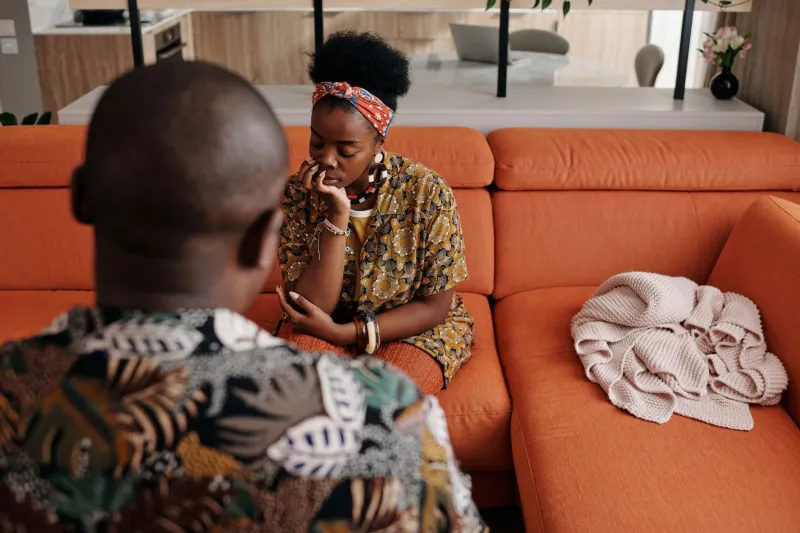
Saying the Quiet Part Loud: What Really Happens When You Finally Tell a Partner What You're Into
There's a version of this story that plays out in a lot of bedrooms across America, usually late at night, usually after some version of should I just say it? has been rattling around someone's head for weeks. Maybe months. Sometimes years.
You're lying there. The lights are low. The moment feels almost right. And then — nothing. The words don't come. You talk yourself out of it again, roll over, and add one more quiet night to the tally.
If that sounds familiar, you're in a lot of company. Disclosing a kink or a desire to a partner for the first time is one of the most emotionally loaded things people do in relationships — and it almost never gets treated that way.
Why This Moment Is Bigger Than the Kink Itself
Here's what's easy to miss when we talk about sexual disclosure: the conversation isn't really about the act or the fantasy or the interest. It's about identity. When you finally put words to something you've privately wanted — especially something that feels outside the mainstream — you're not just sharing information. You're handing someone a piece of yourself that you've kept locked up.
That's vulnerable in a way that's hard to overstate.
Psychologists who study self-disclosure talk about something called the "vulnerability loop" — the idea that genuine intimacy requires risk, and that the risk itself is part of what makes closeness possible. When you tell a partner something real about your desires, you're not just opening a negotiation. You're trusting them with your inner world. That's a relationship milestone whether the conversation goes smoothly or not.
The kink is almost beside the point.
The Buildup Nobody Talks About
Before the words come out, there's usually a whole internal drama that's been running quietly in the background.
For some people, it starts with recognition — a moment when they realize what they're into has a name, a community, a context beyond their own imagination. Maybe they stumbled onto something online, or a conversation with a friend cracked something open. That recognition can feel like relief and terror in equal measure.
Then comes the calculation. What will they think of me? Will this change how they see me? What if they're disgusted? What if they say yes and then it's weird? What if they say no and now it's just... out there?
This mental rehearsal phase can last a very long time. People script conversations in their heads. They pick up the thread and drop it over and over. They look for signals — does my partner seem open-minded? Have they ever said anything that suggests they might be into this? — trying to reduce the uncertainty before they take the leap.
All of that internal labor is real, and it's exhausting. And it's completely invisible to the partner who's about to be told.
How People Actually Say It
There's no single script for this conversation, and honestly that's fine. What's interesting is the range of approaches people use — and how much the how shapes what comes next.
Some people go direct. They find a calm moment, take a breath, and just say it plainly: "There's something I've wanted to bring up with you. Something I'm into that I haven't told you about." Straightforward, a little clinical, but it gets there.
Others ease in sideways — referencing something they watched or read, asking hypotheticals, testing the temperature before committing to the reveal. This approach can feel safer, but it also sometimes leaves partners confused about whether they're being told something real or just having a casual conversation.
Then there's the heat-of-the-moment disclosure, which is exactly what it sounds like: something slips out during intimacy, or someone asks "what do you want?" and the honest answer finally comes through. This one can go either way. Sometimes the context makes it easier. Sometimes it catches both people off guard in ways that are hard to process in real time.
None of these approaches is wrong. But being intentional about when and how you say it — choosing a moment when both of you are relaxed, sober, and not in the middle of something else — tends to give the conversation more room to breathe.
The Range of Outcomes (and Why All of Them Are Survivable)
Let's be honest: this conversation doesn't always go the way you hope.
Sometimes a partner responds with warmth and curiosity, and it becomes one of those moments that quietly deepens a relationship. Sometimes they need time — they're not sure how they feel, they want to think about it, they come back later with questions. Sometimes the response is discomfort or rejection, and that lands hard.
What matters is that all of these outcomes are survivable. Even the painful ones.
A "no" or a "I don't think that's for me" doesn't have to end a relationship or mean there's something wrong with what you want. It means you've learned something true about your compatibility in this area — and that's information worth having, even when it hurts. What you do with that information (talk more, negotiate, seek fulfillment elsewhere within agreed-upon terms, or ultimately reckon with a real incompatibility) is a separate conversation.
What's not survivable — at least not without cost — is the long-term suppression of something that's genuinely part of who you are. Keeping a significant desire locked away indefinitely tends to breed resentment, distance, and a particular kind of loneliness that's hard to name but very easy to feel.
What the Disclosure Actually Changes
Even when the conversation is awkward or the response is uncertain, something shifts after you say it out loud.
For a lot of people, the immediate feeling is relief — not because everything is resolved, but because the secret is no longer entirely theirs to carry. There's something lighter about being known, even imperfectly.
For the relationship, the disclosure often opens a door that can't really be closed again — and that's not a bad thing. Partners who respond well frequently report that the conversation made them feel more trusted, more chosen, more inside the real version of their person. It's an invitation into someone's interior life, and a lot of people receive it that way.
And for the person who finally said it? There's often a recalibration of self-worth that happens quietly in the aftermath. The thing they feared would make them unlovable didn't. Or if it created friction, they handled it. Either way, they proved to themselves that they could be honest about who they are.
That's not a small thing.
If You're Still in the Rehearsal Phase
If you're reading this and you're still on the other side of that conversation — still running the mental scripts, still waiting for the right moment — here's what's worth sitting with:
The "right moment" rarely announces itself. You usually have to create it.
You don't have to disclose everything at once. Starting with "there's something I've been wanting to talk to you about, but I'm nervous" is a complete and legitimate first sentence.
Your desire is not shameful because it's unfamiliar. It's just part of you.
And the version of your relationship where your partner actually knows you? That one is worth the risk of the conversation it takes to get there.