Still Here, Still Kinky: How to Build an Erotic Life That Grows With You Over the Decades
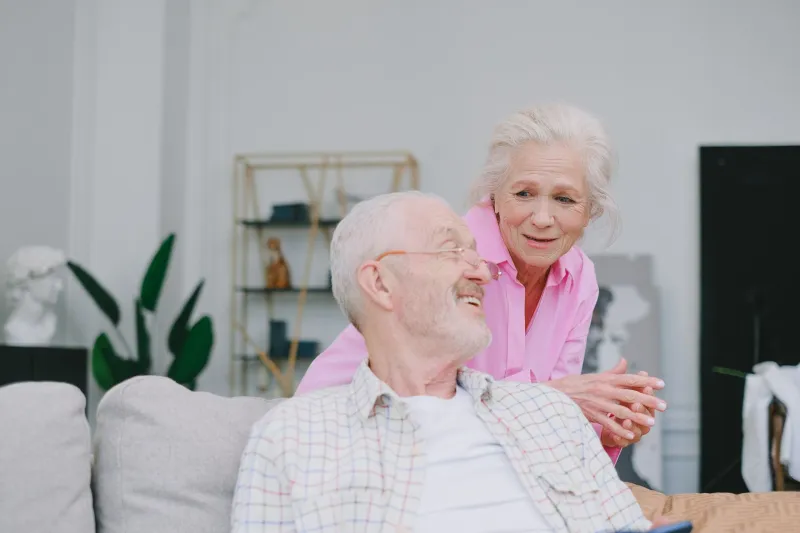
Somewhere along the way, kink culture absorbed the same obsession with youth that mainstream culture exports relentlessly. The imagery, the aesthetics, the unspoken assumptions about who gets to be a sexual being worth seeing — all of it skews toward the young and the newly-discovered. If you've been at this for a while, or if you're just starting out and thinking about the long game, you may have noticed that there isn't much of a roadmap for what an alternative sexual life looks like at 55. Or 65. Or beyond.
That gap is a problem worth fixing. Because desire doesn't come with an expiration date, and the kind of intentional, communicative, exploratory approach to sexuality that kink requires is — if anything — better suited to people with decades of self-knowledge behind them than to people still figuring out who they are.
Let's talk about building something that lasts.
The Youth Bias Is Real — And It's Worth Naming
Kink communities in the US, particularly those organized around events and social spaces, skew younger. This isn't just perception: surveys of kink community demographics consistently show peak participation in the 25–40 range, with significant drop-off after 45. Some of that reflects genuine life changes — careers, caregiving, health — but a lot of it reflects the quiet message that older participants receive from spaces that weren't designed with them in mind.
The aesthetics of most kink-adjacent media, education, and marketing center youth. The "new to kink" narrative is almost always framed as a young person's discovery story. The implicit message is that kink is something you find in your 20s and either integrate into a "normal" life by 40 or leave behind like a phase.
This is both factually wrong and genuinely harmful. People in their 50s, 60s, and 70s are having some of the most sophisticated, self-aware, and deeply satisfying erotic lives of anyone in the community — precisely because they've had the time to figure out what they actually want and the confidence to ask for it. They just aren't often centered in the conversation.
What Actually Changes — And What Doesn't
Honesty first: some things do change with age, and pretending otherwise doesn't help anyone.
Physical capacity shifts. Joints that were fine with extended bondage positions at 30 may not cooperate at 55. Energy levels, recovery time, and physical stamina all evolve. Hormone changes — particularly around menopause and andropause — affect libido, arousal patterns, lubrication, and erectile function in ways that are real and worth acknowledging rather than powering through.
Relationship configurations shift. Long-term partners die, divorce, or change. Children leave home. Career pressures ease. The social infrastructure around your erotic life looks different at 60 than it did at 30, and that requires adaptation.
Risk tolerance evolves. Some people find that age brings greater freedom — less to prove, less fear of judgment, more willingness to ask for exactly what they want. Others find that health considerations, professional standing, or family complexity make certain types of risk feel less manageable. Both are valid, and neither is permanent.
Here's what doesn't change: the fundamental human need for connection, sensation, exploration, and the particular kind of intimacy that comes from being truly known by another person. Desire doesn't retire. It redirects.
Building Practices That Age Well
The kink practices most likely to remain satisfying across decades are the ones built on communication, flexibility, and meaning — not just on physical intensity.
Lean into psychological depth. Sensation play, impact, and physical restraint are all valid and wonderful, but they're also the areas most affected by physical change. Power exchange dynamics, erotic roleplay, dominant/submissive relationship structures, and sensation-based practices that don't require extreme physical positions can deepen and evolve in ways that become more rather than less interesting over time. The psychological dimensions of kink — the trust, the vulnerability, the negotiated power — don't require a particular body age to access.
Renegotiate regularly and without drama. The couples and individuals who sustain kinky relationships across decades are almost universally the ones who treat renegotiation as routine maintenance rather than a crisis signal. Annual or semi-annual check-ins on what's working, what's shifted, and what you're curious about now normalize the evolution of desire and prevent the accumulation of unspoken dissatisfaction.
Invest in community that includes people older than you. If everyone in your kink social circle is in their 20s and 30s, you're missing out on one of the most valuable resources available: people who have already navigated the transitions you're heading toward. Seek out elders in your community. Ask questions. The wisdom available from people who've been doing this for 30 years is genuinely irreplaceable.
Build the education habit now. Kink education — workshops, reading, skill-building — is most valuable when it's ongoing rather than front-loaded at the beginning of your exploration. The people who keep learning throughout their kink lives are the ones who keep finding new things to be interested in, which is a pretty reliable predictor of sustained engagement.
Navigating Health Changes Without Losing Your Erotic Identity
This is the conversation that almost never happens in kink spaces, and it should. Health changes — chronic illness, disability, surgical outcomes, medication effects, neurological changes — are part of life for most people eventually. And they don't have to mean the end of an active erotic life. They do mean adaptation.
Talk to your doctor. This sounds obvious, but a significant number of people don't disclose their sexual practices to healthcare providers because of shame or anticipated judgment. Finding a kink-aware or at minimum kink-neutral physician means you can have honest conversations about how medications affect arousal, how a surgical recovery will affect specific activities, or what physical accommodations might make certain practices safer. The American Association of Sexuality Educators, Counselors and Therapists (AASECT) maintains directories of providers trained to have these conversations without judgment.
Modify rather than abandon. Almost every kink practice has adaptive variations. Bondage with mobility limitations can shift toward symbolic restraint or lighter sensory restriction. Impact play can move from high-intensity to precision-focused. Dominant/submissive dynamics can be expressed through ritual, protocol, and psychological exchange rather than physical performance. The underlying desire — for surrender, control, sensation, connection — doesn't require a specific physical execution.
The Long View on Relationship Structures
Kinky relationships that last decades look different from the outside than they do from the inside. From the outside, you might see two people who seem comfortable and settled. From the inside, there's often a continuous, evolving conversation about who they are to each other, what they want now versus what they wanted ten years ago, and how their dynamic serves the people they've become.
The polyamorous and relationship-anarchist communities — which have significant overlap with kink communities — have developed some of the most sophisticated frameworks for navigating long-term relationship evolution. Concepts like relationship agreements with scheduled renewal dates, explicit conversations about relationship transitions rather than assumed permanence, and the normalization of changing configurations over time are all tools worth borrowing regardless of your specific relationship structure.
The Most Radical Thing You Can Do
In a culture that treats older sexuality as invisible at best and embarrassing at worst, simply continuing to be a sexual person — curious, intentional, exploratory — is an act of genuine resistance. The most radical thing you can do for your future self is refuse the narrative that erotic life has a shelf life.
Build practices that can flex. Build relationships that can renegotiate. Build community that includes people at every stage. And keep showing up for your own desire, even when — especially when — the culture tries to tell you that you've aged out of it.
You haven't. You're just getting started on the most interesting part.