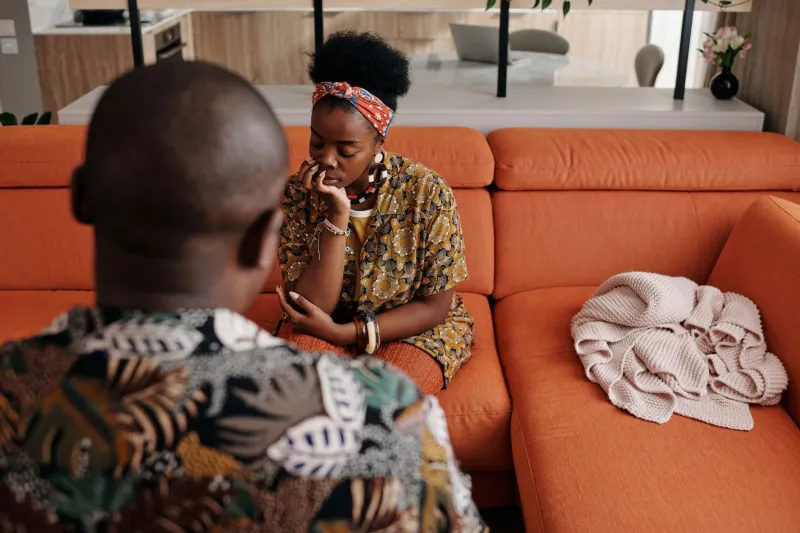
You Said the Word — Now What? The Emotional Aftermath Nobody Warns You About

You did the homework. You picked your word — maybe it's "red," maybe it's "pineapple," maybe it's something completely random that felt safe and silly enough to stick in your brain. You talked about it beforehand. You felt prepared.
And then the moment actually arrived. You said it. Or your partner said it.
And suddenly nobody told you what happens next.
For all the ink spilled on how to choose a safe word, there's a strange silence around what using one actually feels like. That silence isn't doing anyone any favors. So let's talk about it — the guilt, the relief, the weird pause in the air, and why the whole experience is actually evidence that your dynamic is working exactly the way it should.
The Moment You Say It
Here's something that surprises a lot of people the first time: saying a safe word rarely feels triumphant. It doesn't feel like snapping your fingers and cleanly exiting a situation. For many people, it feels messy. There might be a rush of relief immediately followed by a wave of doubt. Did I really need to stop? Was I being too sensitive? Am I going to ruin this?
Those thoughts are incredibly common — and they're worth naming out loud, because they have a sneaky way of making people not use their safe word when they actually need to.
If you're the one who said it: your body or mind sent you a signal, and you honored it. That's not weakness. That's the whole system functioning correctly. The point of consent in action is that you actually use the tools you negotiated. A safe word that sits unused because you're afraid of disappointing someone isn't a safe word — it's a decoration.
What the Person Who Hears It Is Going Through
On the other side of that moment, things can get complicated too. If you're the partner who hears the safe word, your nervous system might spike in a way that feels a lot like panic. You might immediately start scanning for what you did wrong. There can be a rush of shame, confusion, or the urge to over-explain and apologize before you've even fully stopped what you're doing.
Here's the move: slow down before you react.
The most important thing in the immediate seconds after a safe word is called is to stop and check in — not to launch into a debrief, not to defend yourself, and definitely not to make your partner feel responsible for managing your emotions about it. A simple "I hear you, stopping now — are you okay?" goes a long way. Let them lead the next few minutes. Some people want to be held. Some people need a glass of water and thirty seconds of quiet. Some people want to laugh it off and some people need to cry. Follow their cues.
The Awkward Silence Is Normal
There is almost always an awkward silence after a scene gets paused or stopped by a safe word. It can feel like the air has been sucked out of the room. You might both be sitting there unsure of whether to speak, whether to touch, whether to make a joke to break the tension.
That silence isn't failure. It's two people recalibrating. It's the nervous system coming down from an activated state. It's space being created for something real to happen.
Let it exist for a moment before you rush to fill it.
Aftercare Matters Even More Here
If you've read anything about aftercare — the intentional care and connection that happens after an intense scene — you already know it matters. But aftercare after a safe word gets called deserves its own specific attention, because the emotional texture is different.
There may be more to process. The person who called the word might feel embarrassed or like they "failed" the scene. The person who heard it might be replaying every moment trying to figure out what went sideways. Both of those internal experiences need room.
Aftercare in this context might look like: staying physically close if that feels good, verbally affirming that the relationship is intact and the trust is intact, and explicitly agreeing to talk more when everyone has had time to decompress. That last part matters — don't try to do the full emotional debrief while you're both still in the raw, activated state of the immediate aftermath. Give it an hour. Give it a day if you need to.
Why Guilt Shows Up (And What to Do With It)
Guilt is probably the most underreported emotion in this whole experience. People feel guilty for stopping a scene their partner was clearly enjoying. They feel guilty for "making" their partner feel bad. They feel guilty for not using the word sooner, or for using it at all.
If you find yourself drowning in guilt after using your safe word, it's worth asking where that guilt is coming from. Often it's rooted in an old story about being "too much" or "not enough" — about being a burden, or about sex being something you're supposed to push through rather than something you get to opt out of at any time.
Here's the reframe: using your safe word is an act of honesty. It's you telling your partner the truth about where you are. That's not a betrayal of the scene — it's a deepening of the trust that makes scenes possible in the first place.
For the Person Who Called Stop: You Don't Owe Anyone an Explanation
You don't have to explain why you called it. You don't have to have a perfectly articulate reason. "It just didn't feel right" is enough. "I got in my head" is enough. "I'm not sure why, I just needed to stop" is enough.
A partner who responds to your safe word by demanding a detailed justification is a partner who hasn't fully understood what consent in practice actually means. Your safe word doesn't require a defense. It requires respect.
What This Experience Actually Tells You
Here's the thing that gets lost in all the emotional noise of the moment: a scene where a safe word gets used and both partners respond with care is a successful scene. Not a failed one.
The whole architecture of negotiated kink is built on the premise that you can stop. That the stop will be honored. That the relationship doesn't hinge on you white-knuckling through something that isn't working for you. When that system gets tested and it holds — when you say the word and your partner stops and checks in and you both take care of each other — that's the dynamic doing exactly what it was designed to do.
That's not something to be ashamed of. That's something to feel genuinely good about.
Using a safe word for the first time is a milestone, not a mistake. It means you trusted the system enough to use it. It means your partner trusted you enough to honor it. And it means you both now have a real, lived experience of consent in action — not just the theory of it, but the actual practice.
That's worth something. Actually, it's worth a lot.